Attic Mold Remediation in Philadelphia, PA
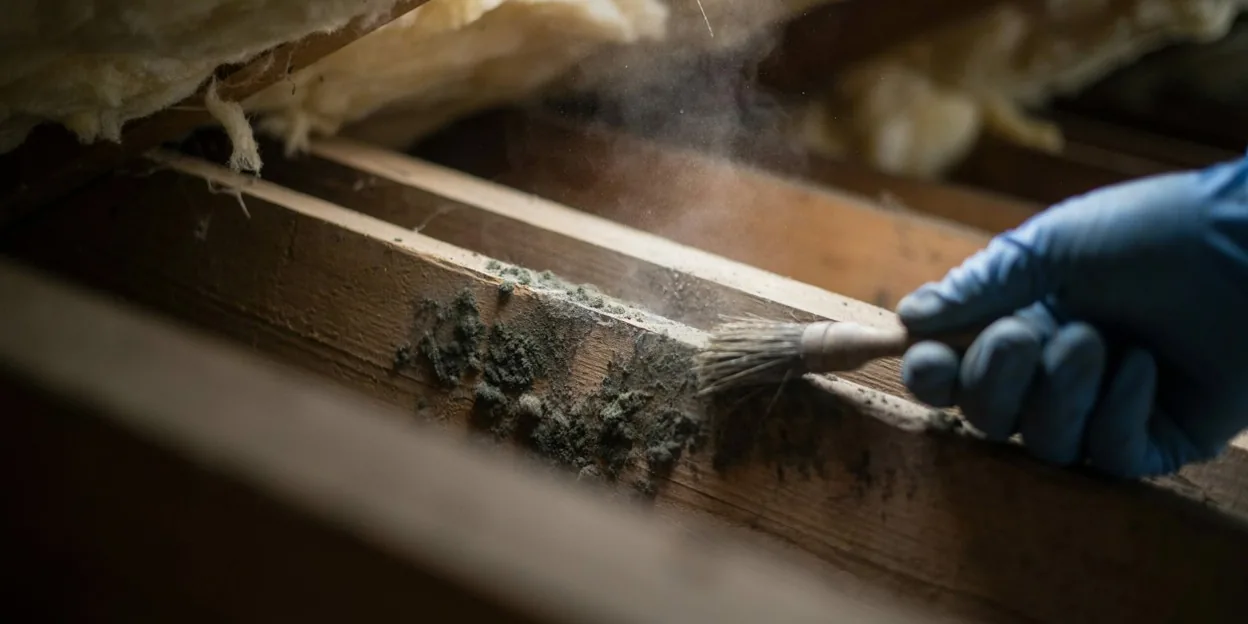
You went up through the hatch in the hall closet of your 1955 twin to find the source of a draft and the underside of the roof deck on the north side is speckled black from the eave to the ridge. Nothing has ever stained a ceiling. Or your rowhouse has no attic at all, just a foot of space between the top-floor ceiling and the flat roof, and when the roofer cut into it he found the joists wet and dark under the spot where the roof ponds. This site connects you by phone with an independent local provider who does attic mold remediation in Philadelphia and across Philadelphia County.
Reading the roof deck for a leak or for condensation
Growth on roof framing has two causes and the crew tells them apart in the first few minutes. A leak wets a patch: dark staining under a nail pop, a plumbing vent, a parapet seam, or the drain box, with dry wood around it. Condensation wets a side: the whole north slope speckled, frost lines on the nails in winter, bathroom fan ducts that end in the insulation instead of outside, and soffit vents stuffed with insulation so no air moves.
The crew meters the deck and the rafters in both wet and dry areas, looks at how the attic breathes, and finds every fan duct and every gap around a chimney or a plumbing stack where warm, wet house air gets up there. In a rowhouse with a flat roof and no attic, they open the top-floor ceiling under the stain and work from below.
Clear the roof box, find the fan ducts, do not disturb the insulation
If the roof is flat, have the drain box cleared today and the downspout checked for a clog. If there is an attic, look at where the bathroom fan ducts go; one that dumps into the insulation is adding a shower's worth of steam to the attic every day. Photograph the growth from the hatch and come back down.
Do not sweep, scrape, or spray the deck, and do not pull up the insulation to look under it. Both put a cloud of spores into air that drains down through the hatch and the ceiling gaps into the bedrooms. Do not have a roofer tear off the roof until the remediation plan is written, because the order of the two jobs matters.
Framing cleaned and sealed, insulation replaced, air path fixed
The crew seals the hatch opening into the hall with plastic and runs a HEPA air scrubber in the attic so the work space is under negative pressure. Insulation under the growth comes out in bags. The rafters, the collar ties, and the underside of the deck are HEPA vacuumed, cleaned with a product made for wood, and in most cases coated with a sealer that locks down what remains and makes a future leak easy to spot. Deck that is punky or delaminated gets cut out and replaced, which is roofing work the crew coordinates.
Then the air path is fixed: fan ducts extended to the outside, soffit and ridge vents opened, and the gaps around the stack and the chimney sealed from below. New insulation goes in last. If the leak that caused it also wet the top-floor ceiling, that ceiling is handled under mold removal or black mold removal. If the whole house smells of it, mold odor removal follows. Replacing a ceiling comes under mold damage repair.
Slate twins in the Northeast, flat roofs everywhere else
The brick twins built across the Northeast from Mayfair to Bustleton in the late 1940s and 1950s have pitched roofs, many still under the original slate, with a shallow attic, a hatch in a closet, and a bathroom fan added later that often vents nowhere. The attic was built to breathe through small gable or soffit vents, and sixty years of added insulation and blown-in cellulose has closed most of them. Winter condensation does the rest.
The rowhouses of South Philadelphia, Fishtown, West Philadelphia, and Germantown have flat roofs with a few inches of airspace above the top-floor ceiling, no ventilation to speak of, and a drain box that ponds when it clogs. The roof framing stays wet for months after a leak because nothing moves the air. Pennsylvania has no mold license, so the company you call represents its own training; re-roofing and structural deck replacement are permitted work through the Department of Licenses and Inspections, and on a house listed on the city's historic register the exterior roofing work may need the Historical Commission's review first.
Calling about a dark roof deck in Philadelphia
Have the address, whether the roof is flat or pitched, and whether the growth is in a patch under a spot that leaks or across a whole slope. Say where the bathroom fans vent and whether a roofer has already been up. Call (215) 600-0376.