Bathroom Mold Removal in Philadelphia, PA
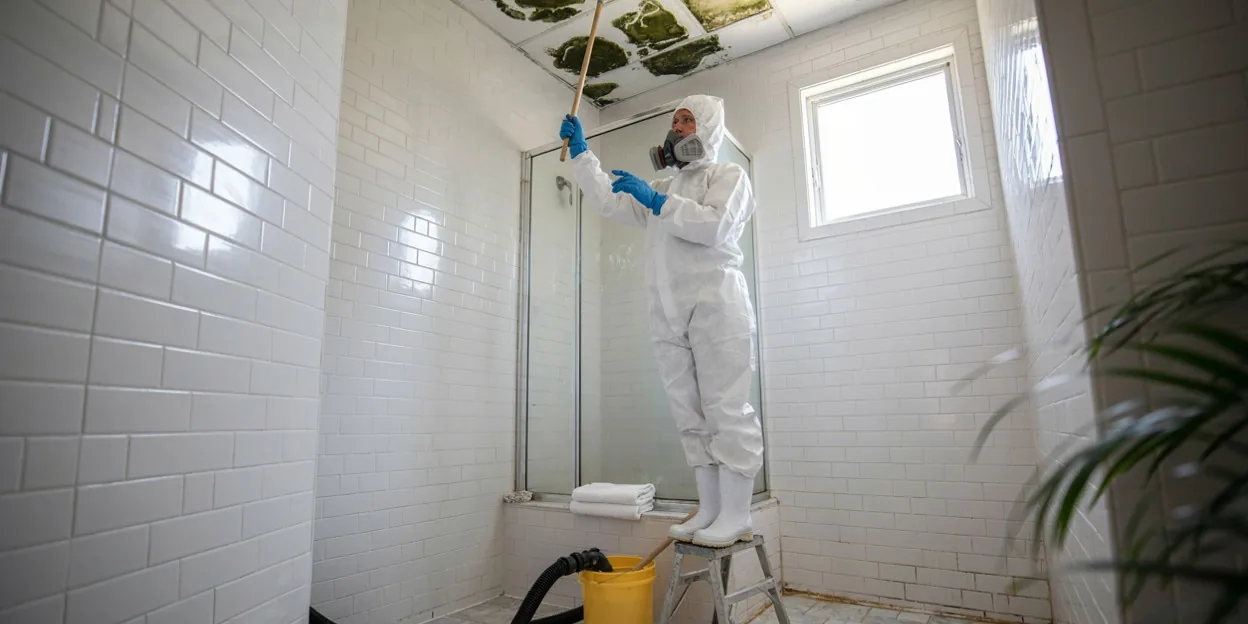
The only bathroom in the house is on the second floor at the back, it has a window that is painted shut and no exhaust fan, and the ceiling above the tub grows a gray film every winter no matter how often you wipe it. This spring the vinyl floor in front of the vanity started to give. Both are the same problem wearing two faces. This site connects you by phone with an independent local provider who does bathroom mold removal in Philadelphia and across Philadelphia County.
Telling a ventilation problem from a plumbing problem in one visit
The ceiling film and the soft floor have different causes, and the crew sorts them out before anything comes apart. They meter the ceiling, the wall behind the tub spout, the wall behind the toilet, and the floor around the vanity and the toilet flange. A ceiling that reads dry under a film of growth is a ventilation problem: steam with nowhere to go. A floor that reads wet at the vanity is a supply line, a drain, or a wax ring.
Then they look below. In a rowhouse the kitchen is usually under the bathroom, and a stain on the kitchen ceiling or a soft spot above the cabinets tells them how long the floor has been leaking. Containment goes up at the bathroom door and over any ceiling opening before they cut.
Open the window, shut the valve, stop wiping
Prop the window open or run a fan in the doorway after every shower until the crew comes. If the floor is soft, shut the supply valves under the vanity and look under it with a flashlight for a wet cabinet floor or a dripping trap. Photograph the ceiling, the floor, and under the sink.
Stop wiping the ceiling with bleach. On a painted ceiling that is still damp, it removes the surface and leaves the growth in the plaster, and the fumes in a room with no fan are their own problem. Do not pull up the vinyl or the tile yourself; a wet subfloor sheds spores when it is disturbed, and you may put a foot through it.
Subfloor and wet wall out, tile and tub stay when they can
For the floor, the vinyl or tile, the underlayment, and the wet section of subfloor come out to the meter line, and the joists below are cleaned and dried. For the wall behind the tub, the tile stays if the backer is cement board and reads dry; if it is old drywall or plaster behind the tile, the wet run comes out. A ceiling that is only filmed over is cleaned, treated, and sealed once the room has a way to vent.
Everything inside the containment is HEPA vacuumed and wiped down, and air movers and a dehumidifier run until the joists and the framing read dry. If the growth on the ceiling is dark and the roof above it ponds, the problem may be the roof rather than the shower; see black mold removal and attic mold remediation. If the smell lingers after the room is dry, that is mold odor removal. The tile, the vanity, and the floor go back under mold damage repair, after the leak is fixed and a fan is in.
One bathroom, no fan, and a kitchen underneath
A Philadelphia rowhouse from the 1890s through the 1920s was built with one bathroom, placed at the back of the second floor above the kitchen, often in a rear ell with its own small flat roof. Few of them had an exhaust fan until recently, and in the 1950s twins of the Northeast the fan that was there has often stopped moving air through a duct that was never connected to the outside. Steam from a shower in a cold room condenses on the ceiling every day from November to March, and the ceiling grows what it grows.
Pennsylvania does not license mold remediators, so the company you call represents its own training. Adding an exhaust fan and its duct, or replacing a drain or a supply line, is plumbing and electrical work that needs a permit through the Department of Licenses and Inspections in the city, or the township if you are in Cheltenham or Upper Darby, and the provider pulls it. Most Pennsylvania homeowner policies pay for a sudden supply-line break and exclude a drip that has run for a year, so tell your adjuster when the floor first felt soft.
Calling about a bathroom that will not stay dry
Have the address, whether the growth is on the ceiling, the wall, or the floor, and whether the room has a working fan or an opening window. Say whether the kitchen ceiling below has a stain and whether a plumber has already been in. Call (215) 600-0376.