Mold Removal in South Philadelphia, PA
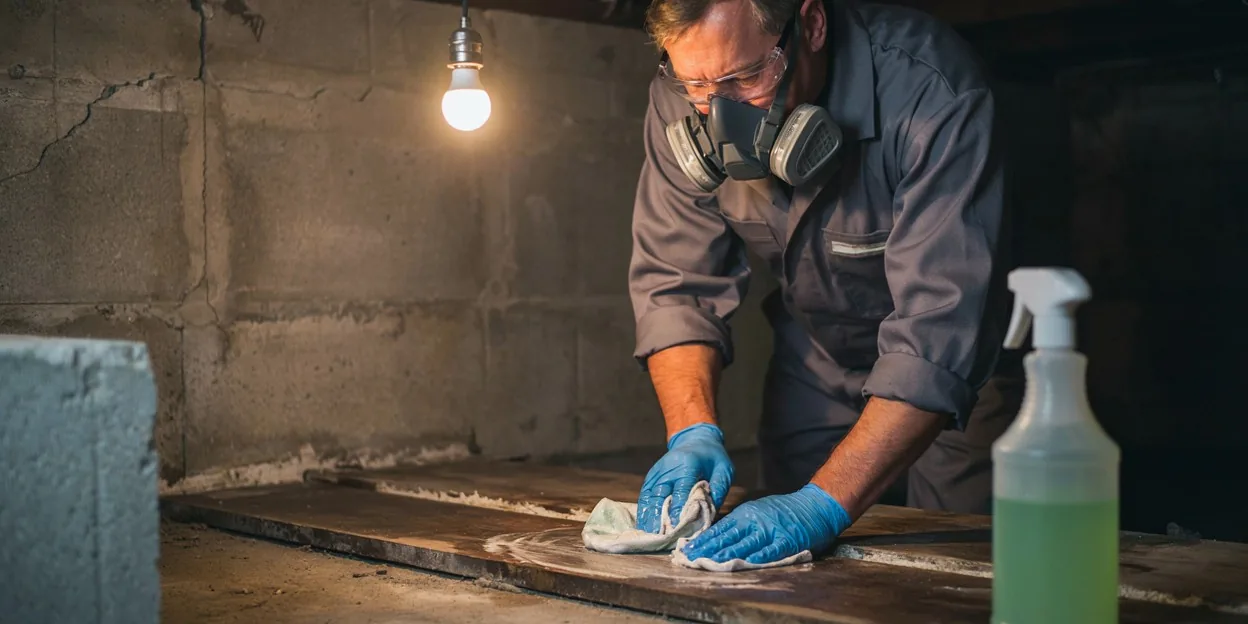
South Philadelphia is the grid below Washington Avenue between the two rivers, built out from the 1880s through the 1920s on what had been marsh and tidal creek, filled and leveled as the rows went in. The houses are two-story brick rowhomes on rubble or early brick foundations, flat roofs draining to one box, basements that often sit below the water table, and a rear kitchen addition over a shallow crawl space. Point Breeze, Passyunk Square, Girard Estate, Whitman, and Pennsport are all variations on it.
Owners in South Philadelphia reach an independent local mold provider through the phone number on this site. That provider walks the house with a meter and says what it needs. Our part is the call.
Low ground and a combined sewer make South Philly one of the parts of the city the Water Department sees the most basement backups in. A storm fills the sewer and the floor drain gives it back. Between storms, the stone foundation weeps through a humid summer, and the party wall carries the neighbor's roof leak onto your plaster.
South Philadelphia mold removal in a row on filled ground
A cellar wall behind paneling that reads wet from floor to sill is mold removal. The crawl space under the kitchen addition that smells every July is mold odor removal. A basement and first floor that took sewer water in a storm is whole-home mold remediation, and a backwater valve on the lateral is part of the conversation afterward.
The old shipyard at the bottom of Broad Street
Broad Street ends at the Philadelphia Navy Yard, the former naval shipyard on the Delaware that is now an office and industrial campus, and the ground between it and Oregon Avenue is the lowest and wettest in the neighborhood.
Call (215) 600-0376 and tell us what you see. We put you through to a local mold provider serving South Philadelphia.
Services Available in South Philadelphia
Mold Removal
Growth on plaster or drywall after a party-wall leak, a stone-foundation seep, or a radiator pipe: room sealed, wet material cut to the meter line, framing HEPA-cleaned and dried.
Black Mold Removal
A dark patch on a basement wall or bathroom ceiling handled by how far the water traveled, not its color: containment, porous material out, hard surfaces cleaned, source fixed.
Whole-Home Mold Remediation
A sewer backup that filled the basement or a flat-roof leak that ran down three floors, mapped floor by floor and cleared in zones as one project.
HVAC Mold Cleaning
Coil, drain pan, and condensate line cleaned or replaced when a basement or closet air handler sweats through a humid Philadelphia summer.
Bathroom Mold Removal
Growth behind a vanity, under a tile shower, or on a ceiling with no exhaust fan in a rowhouse second-floor bath, removed with the leak fixed first.
Attic Mold Remediation
Growth on rafters and sheathing under a flat roof or a twin's slate roof, cleaned and treated once the roofing or the ventilation is corrected.
Mold Odor Removal
A musty smell in a rowhouse that looks fine, traced to a wet stone wall, a damp joist end, or the dirt under an old cellar floor, then removed and treated.
Mold Damage Repair
Plaster, drywall, baseboard, and subfloor put back after removal, once the basement reads dry and the roof, pipe, or drain that caused it is repaired.